

Simplify Shift-Based Rostering with Inzenius – as you like it
Rostering is a core operational task for any business with shift workers, yet it often consumes hours of manual effort every week. Modern rostering software simplifies the process, helping managers create schedules that balance operational needs with employee preferences while staying compliant with complex awards and agreements. For Australian businesses particularly, where labour costs frequently exceed 30% of revenue and award interpretation is intricate, an effective rostering system can deliver significant time and cost savings.

What Is Rostering?
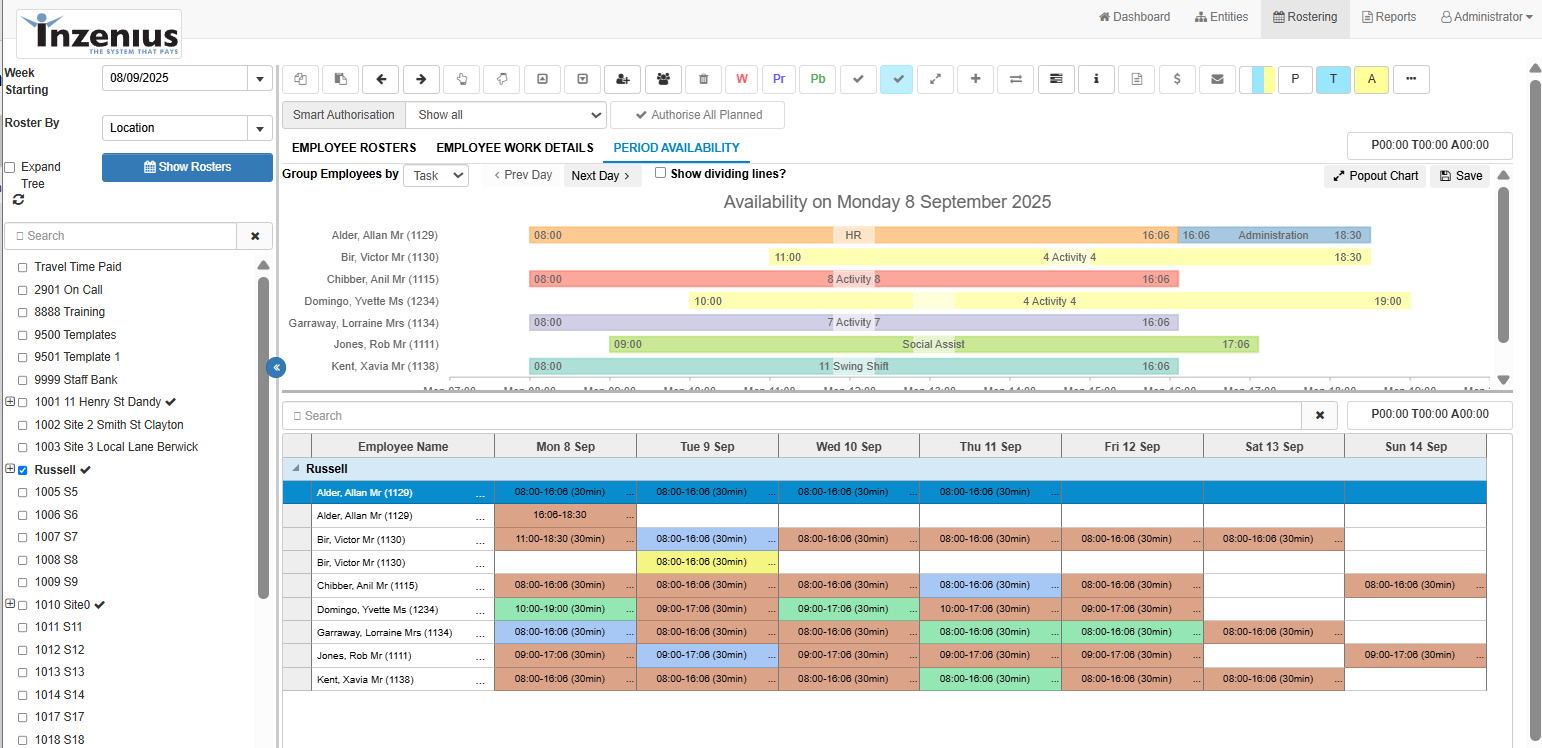
Rostering is the process of creating and managing employee schedules, allowing managers, team leaders, and staff to view their rosters anywhere, at any time. It involves assigning shifts to meet a business’s operational needs, typically based on an employee’s role or availability. Effective rostering ensures the right people are available at the right times to meet operational demands and supports compliance with labour laws. The concept has evolved from paper rosters and manual spreadsheets to digital platforms that offer real-time visibility and automation.
Common Rostering Challenges
Many businesses still rely on manual rostering methods, which can lead to persistent problems. These include:
-
Compliance obligations – Meeting award conditions, penalty rates, and maximum shift lengths becomes difficult without automated tracking.
-
Over- or under-staffing – Without accurate demand forecasting, managers may schedule too many or too few staff, hurting service quality or labour costs.
-
Absenteeism – Late sick calls or no-shows create gaps that require last-minute adjustments.
-
Manager overwork – Spending hours each week juggling spreadsheets, emails, and phone calls to fill shifts leads to burnout and errors.
-
Staff can bid for unfilled rosters – where rosters are created with named or unfilled shifts for available staff to bid for the shifts for managers to approve
-
Multi-engagements in the one shift – Staff who need to be rostered to more than one engagement in the shift that may be in different locations, positions, events and may be paid under different award conditions
These challenges are especially pronounced in shift work industries such as hospitality, healthcare, and event management, where staffing needs fluctuate daily.
Benefits of Modern Rostering Software
Switching to a dedicated rostering platform offers tangible advantages. Modern staff rostering should accommodate employee autonomy, flexibility, and work-life balance, moving beyond manual scheduling. Key benefits include:
-
Operational efficiency – Automating shift creation and assignment frees managers to focus on strategic tasks.
-
Compliance assurance – Automated rules help align rosters with award requirements and labour laws.
-
Employee satisfaction – Self-service portals allow staff to view schedules, bid for shifts, request time off, and swap shifts easily.
-
Cost control – Real-time visibility into labour costs enables better budgeting and reduces overtime.
-
Reduced absenteeism – Features such as shift bidding and availability preferences minimise gaps.
-
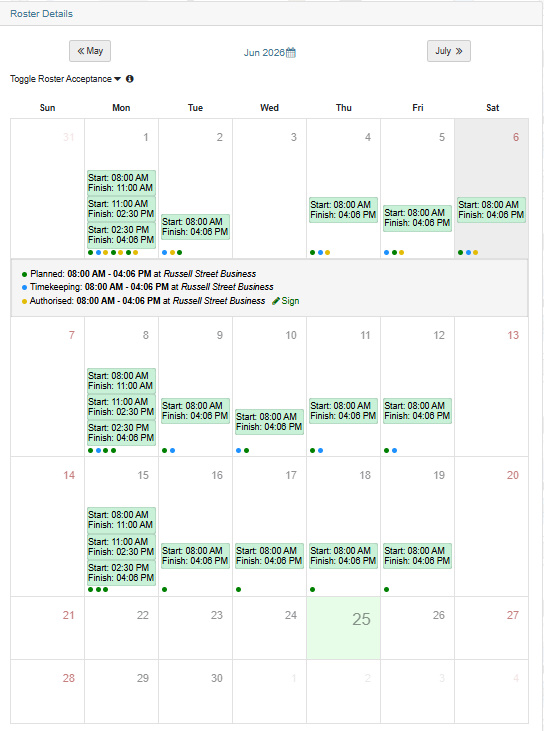
Recording roster acceptance – In Australia, part-time and full-time employees need to have the days and times worked on the contract of employment that may not be varied without the employee’s acceptance of the change, without incurring time worked penalty rates
By providing the right staffing levels at the right times, businesses can improve service delivery and profitability.
Key Features to Look for in Rostering Software
Not all rostering software is created equal. When evaluating options, consider features that address common pain points. Based on capabilities available in leading platforms, the following features are essential:
-
Shift offering and bidding – Automatically offer unfilled shifts to available employees or allow staff to bid for preferred times.
-
Compliance management – Built-in rules that flag potential award breaches, such as insufficient rest breaks or excessive hours.
-
Work restrictions – Set limits based on availability, role, qualification, or location to ensure only eligible staff are scheduled.
-
Roster views – Customisable layouts for different managers, departments, or locations, making it easy to see who is working where.
-
Cost centre-based rostering – where only those approved to work under the approved cost centres for the employee
-
Department-based rostering – with only the approved employees for the department presented for rostering
-
Position-based rostering – Assign shifts to positions rather than individuals, then match staff based on availability and qualifications.
-
Event-based rostering – where employee shifts are applied to a particular event
-
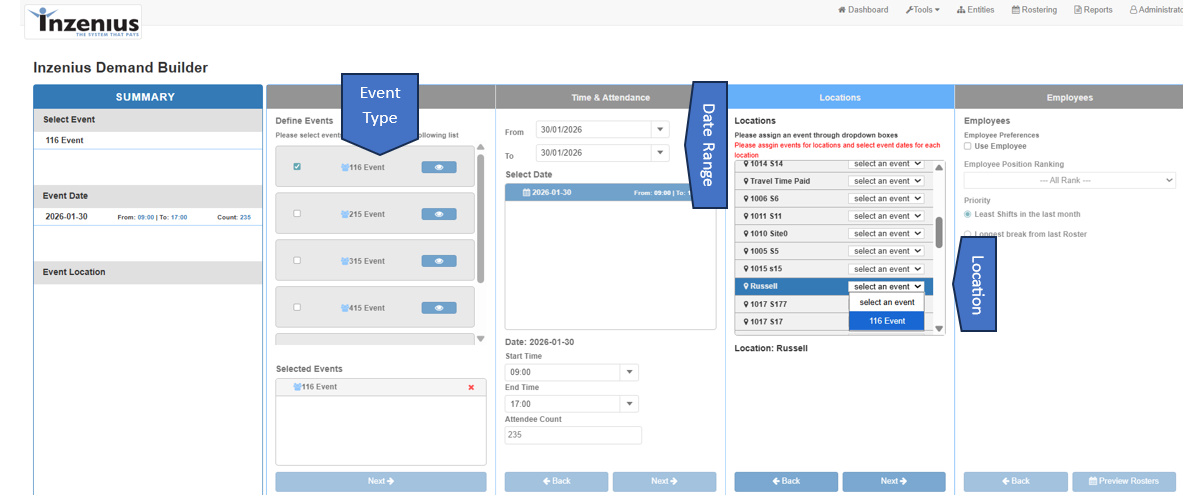
Demand-based rostering – where the roster only needs to select the event type, dates and event start time to generate optimised rosters and fill shifts and find the employees to fill the shift for publication and acceptance of them
-
Automation of routine tasks – Manage availability changes, PTO requests, and shift replacements without manual intervention.
-
Blank canvas rostering – Build from the ground up of rosters for each employee that satisfy the business requirements
-
Employee contract roster – Selection of a group of rosters to be tagged as the employee contract rosters
-
Dynamic roster cost Interpretation – as rosters are created, they are interpreted with all shift penalties and loadings
These features help reduce the administrative burden and improve the accuracy of rostering decisions and distributions
How Inzenius Delivers Efficient Rostering
Inzenius provides an integrated platform for payroll, rostering, time and attendance, and award interpretation, tailored specifically for Australian and New Zealand businesses. The rostering component includes budgeting and cost management, allowing managers to see the projected labour cost of each roster as they build it. This helps prevent overspending and supports better financial planning.
Because Inzenius combines rostering with a patented award-interpreter engine, the platform automatically applies the correct pay rates, penalties, and allowances based on the awards and agreements that apply to each employee. This end-to-end approach reduces data entry errors and ensures that the time spent scheduling directly feeds into compliant payroll processing. For businesses where labour costs exceed 30% of revenue, this integration can make a significant difference in both confidence in compliance and bottom-line control.
Frequently Asked Questions
What is the difference between rostering and scheduling?
Rostering and scheduling are often used interchangeably, but rostering typically refers to assigning shifts to employees to meet operational needs, while scheduling can encompass broader time management of tasks. In practice, rostering software handles shift creation, staff availability, and compliance checks, whereas scheduling may also involve project timelines and appointments. Most HR platforms now use the terms synonymously.
How can rostering software reduce compliance risk?
Rostering software reduces compliance risk by automatically applying award rules to each shift. It can flag issues such as insufficient rest breaks, excessive hours, or incorrect penalty rates before the roster is published. This proactive approach helps avoid underpayment claims, fines, and reputational damage. Software that incorporates award interpretation into the rostering process offers the strongest protection.
What types of businesses benefit most from rostering software?
Businesses with variable staffing needs (shift workers), high employee turnover, or complex award structures benefit most. Typical industries include hospitality, healthcare, aged care, retail, farming, venue and hotel management, call centres, and event-based operations. Any organisation where labour is a major cost and scheduling is done manually will see improved efficiency and compliance after adopting dedicated rostering software.
Can rostering software handle employee shift swaps and time-off requests?
Yes, Inzenius rostering software includes self-service portals where employees can request time off, bid for available shifts, and indicate availability. Managers can approve or reject these requests with a few clicks, and the roster updates instantly. This reduces administrative work and gives staff more control over their schedules, which can improve morale and reduce absenteeism.
Rostering software has become an essential tool for Australian businesses that rely on shift workers. By automating the creation and management of staff schedules, it helps managers save time, improve compliance, and control labour costs. Solutions like Inzenius that combine rostering, payroll, and award interpretation offer a unified approach that simplifies the entire process, from scheduling to pay. For any business looking to move beyond manual rostering, investing in a capable software platform is a practical step toward greater efficiency and peace of mind.